Spare a thought: Jesus was a refugee
Some stories are so familiar we stop noticing their weight.
We think we know them, where they begin, how they end, what they’re meant to teach us. But every so often, someone tells an old story in a way that lets it breathe again.
That’s what happened when Rosa Brown, our Communications Officer, appeared on the Spare a Thought for an episode titled “Jesus Was a Refugee.”
Rosa was invited to talk about our work — the everyday, often unseen work of welcome, care, and solidarity.
A simple idea, quietly radical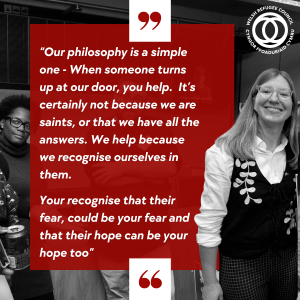
At the heart of Rosa’s reflections is a deceptively simple philosophy. It doesn’t lean on grand language or moral posturing. It’s rooted in recognition.
“Our philosophy is a simple one — when someone turns up at our door, you help.
It’s certainly not because we are saints, or that we have all the answers.
We help because we recognise ourselves in them.You recognise that their fear could be your fear,
and that their hope can be your hope too.”
It’s an idea that sidesteps debate and goes straight to something more elemental. Not what do we owe strangers? but what do we see when we really look at them?
Rereading the story
According to the Gospel of Matthew, Jesus, Mary, and Joseph fled their home under threat of violence. They crossed borders. They depended on the goodwill of others. Their safety rested on whether they would be allowed to stay.
By any contemporary definition, they were refugees.
It’s a detail often glossed over, perhaps because of how unsettling it is. The central figure of Christianity not as king or teacher, but as a displaced child. Vulnerable. Uncertain. Carried into the unknown by parents doing what parents have always done — trying to keep their child alive.
The story, now
Once you notice this, it becomes difficult not to see the echoes.
Across Wales today, people arrive seeking sanctuary for reasons that feel heartbreakingly ordinary: conflict, persecution, the slow erosion of safety. They come not with grand plans, but with the hope that somewhere else might offer a chance to begin again.
The response, at its best, is rarely dramatic. It is quiet. Human. A cup of tea. A room made ready. A decision — often instinctive — to help first and ask questions later.
Not because people believe themselves to be exceptional. But because, in moments of clarity, the line between their life and ours doesn’t feel so solid.
Why this story matters
Stories like this don’t change minds by force. They do something subtler. They adjust the frame. They invite us to imagine proximity instead of distance, resemblance instead of difference.
That is the core of Rosa’s message— not telling people what to think, but reminding us what we already know, somewhere beneath the noise.