Is immigration really replacing people in Wales? Let’s look at the facts
Claims made in the Senedd this week about the ‘replacement’ of white British people have understandably caused concern. But what does the evidence actually tell us about immigration in Wales?
On 10 November, a Senedd Member raised the idea that white British people are being replaced through immigration, here is what they said:
“Mass immigration and differing birth rates mean that, in just 37 years’ time, in 2063, we will be a minority in our own country.”
It’s a worrying claim, particularly for people who have made Wales their home. But before believing it, we need to ask a simple question: what do the facts actually show?
According to the latest Census, carried out in 2021 by the government, we see something different:
- 93.8% of people in Wales identified as White.
- 90.6% identified as White Welsh, English, Scottish, Northern Irish or British.
- 93.1% of people living in Wales were born in the UK.
Wales is becoming more diverse. Between 2011 and 2021, the proportion of people identifying as White fell from 95.6% to 93.8%. But these figures tell us about changes in our population. They do not show that anyone is being deliberately replaced.
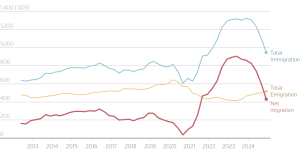
In fact, net migration to the UK fell by 49% between December 2024 and December 2025.
Migration has always been part of Wales’ story
Wales has been shaped by people moving here for generations. Irish workers helped build our railways and docks. Italian families established businesses in our valleys. Somali seafarers became part of Cardiff’s history.
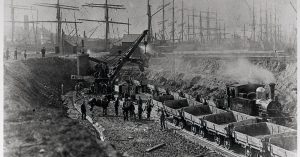
In the nineteenth century, Cardiff even had a neighbourhood known as ‘Little Ireland’, home to thousands of Irish migrants. Today, these communities are part of the Wales we recognise.
Our history shows that people can build new lives here while becoming part of our shared identity. You don’t have to be born in Wales to belong here.
What about the prediction for 2063?
The claim that white British people will become a minority by 2063 comes from one researcher’s demographic model. It is not an official forecast from the Office for National Statistics (ONS).
It’s critical to remember that predictions depend on assumptions about migration, birth rates and how people identify themselves. Those assumptions can change. A projection is not a certainty. And changing demographics are not evidence of a deliberate plan to replace people.
Our words matter, especially in the Senedd
We should be able to have honest conversations about immigration, housing, public services and integration. People have genuine questions, and they deserve thoughtful answers. But presenting uncertain predictions as inevitable facts, particularly alongside claims of racial replacement, risks creating damaging fear and hostility.
Following this week’s contribution, the Llywydd ruled that the language used was unnecessarily provocative and deliberately offensive. That distinction matters. Challenging how immigration is discussed is not the same as shutting down debate about immigration.
As elected representatives, our politicians have a responsibility to communicate evidence accurately and treat the communities they represent with dignity.
For anyone feeling unsettled by this week’s headlines, it’s worth remembering that Wales’s future is not a competition between different communities. We can recognise the challenges facing our country without blaming people because of where they come from.

The next time you see a worrying claim about immigration, ask where the figure comes from, what it measures and whether a prediction is being presented as fact.
Pause. Think. Check.
Behind the Headlines is a Welsh Refugee Council initiative helping people separate facts from misinformation and have more informed conversations about asylum and immigration.